

Opening a private bank account is the most critical step in moving to the Principality. You cannot secure a residency card without first depositing a minimum of €500,000 into a local Monaco bank.
In 2026, Monaco hosts approximately 25 active financial institutions regulated by the CCAF. While the legal minimum deposit is €500,000, many elite banks require initial deposits between €1 million and €5 million.
Here is exactly how private banking in Monaco works in 2026, including the real minimum deposits, the top institutions, and the compliance process.
The Banking and Residency Connection

You cannot become a Monaco resident without a local bank account. It is a mandatory requirement.
To prove you have sufficient financial resources to live in the Principality, the government requires a formal “bank attestation” (a certificate of funds). To issue this certificate, the bank requires you to lock in a minimum deposit. This money must remain in the account for the duration of your residency.
Before you approach a bank, we highly recommend reviewing our Monaco Residency Checklist 2026 to understand exactly when the banking step fits into your overall relocation timeline.
One of the main reasons people open a Monaco bank account is residency. The bank must issue a formal confirmation of your funds, and our guide explains exactly how to get a bank attestation for Monaco residency.
The Real Minimum Deposits for 2026
There is a major difference between the government minimum and the bank minimum.
The Monaco government mandates a €500,000 deposit per main applicant. However, private banks are independent businesses. They have their own internal wealth thresholds. Here is what you can actually expect when applying in 2026.
- The €500,000 Tier: A few institutions like Société Générale Monaco, LCL, and Compagnie Monégasque de Banque (CMB) may accept the standard €500,000 deposit to help you secure your residency.
- The €1 Million Tier: Many mid level private banks have raised their entry requirements. Institutions such as Andbank Monaco, Union Bancaire Privée (UBP), and J. Safra Sarasin typically require minimum initial deposits of €1,000,000.
- The €3.5 Million to €5 Million Tier: The most exclusive banks in the Principality operate in this tier. Barclays Private Bank, UBS Monaco, and Edmond de Rothschild usually require starting deposits between €3.5 million and €5 million.
You should factor these liquidity requirements into your overall budget, alongside the expenses detailed in our Cost of Living in Monte Carlo guide.
The Top Private Banks in Monaco
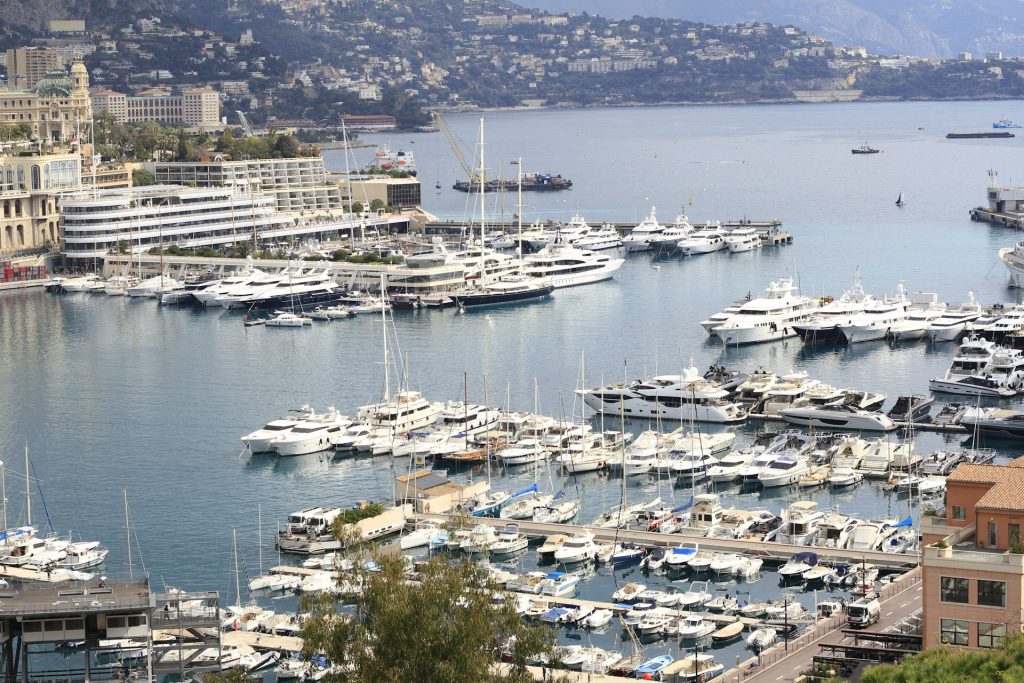
The sector is highly consolidated. A few major players hold the vast majority of the assets. Based on total assets and market share, these are the leading institutions in 2026.
Barclays Bank PLC Monaco
Barclays is the largest bank in Monaco by total assets, holding nearly 27% of the market share. They focus strictly on elite wealth management, bespoke lending, and global investment portfolios.
CMB Monaco (Compagnie Monégasque de Banque)
Historically, CMB is a local powerhouse. It ranks as the second-largest bank in the Principality. They offer comprehensive private banking, investment management, and real estate financing tailored specifically to Monaco residents.
CFM Indosuez Wealth
Supported by the Crédit Agricole group, CFM Indosuez is the only bank in Monaco that serves private investors, large businesses, and institutional clients alike. They have deep local roots and several branches, including a prominent office right by the Golden Square. You can read more about this district in our Monte Carlo Neighborhood Guide.
Bank Julius Baer Monaco
This Swiss giant brings a highly traditional approach to asset management. They specialize in pure advisory services and long-term portfolio growth.
The Compliance and Onboarding Process
Monaco is no longer an offshore tax haven with secret accounts. The banking sector is heavily regulated by the CCAF (Commission de Contrôle des Activités Financières) and follows strict European compliance standards.
The onboarding process requires heavy documentation. You must provide a flawless KYC (Know Your Customer) package. This includes verified passports, utility bills, and most importantly, a fully documented history of your wealth origination.
If your wealth comes from standard corporate dividends or real estate sales, the process is straightforward. If your wealth comes from crypto assets, the compliance checks are much deeper, and the required minimum deposit is often pushed toward the €5 million mark.
Once you submit all your documents, the bank has an official period of 15 business days to either approve your account or issue a formal refusal.
Financing Your Real Estate
Most new residents leverage their deposits to buy local property.
Monaco private banks are experts at structured lending. They frequently offer Lombard loans and bespoke mortgages to help clients purchase luxury apartments without liquidating their global portfolios.
If you plan to use bank financing for a property, you should read our guide on the Hidden Costs of Buying Real Estate in Monaco to understand the notary fees involved.
Navigate the Banking Ecosystem with Us
Choosing the right bank determines the success of your relocation. Different banks specialize in different nationalities, asset classes, and financing structures.
We help our readers bypass the general application desks. We can introduce you directly to the senior relationship managers at Monaco’s top private banks, ensuring a smooth and discreet onboarding process. If you are exploring your options, start by reading our overview on Relocating and Investing in Monaco.
Click here to contact us and schedule a private introduction to a Monaco bank.
Summary: Private Banking in Monaco 2026
| Feature | Information |
| Number of Banks | Approximately 25 active institutions. |
| Residency Requirement | A local bank account is mandatory for a residency card. |
| Legal Minimum Deposit | €500,000 per main applicant. |
| Actual Bank Minimums | Ranges from €500,000 to €5,000,000 depending on the bank. |
| Top Institutions | Barclays, CMB Monaco, CFM Indosuez, UBS, Julius Baer. |
| Approval Timeline | Typically 15 business days after full document submission. |
| Regulator | CCAF (Commission de Contrôle des Activités Financières). |
Frequently Asked Questions
Can a non-resident open a bank account in Monaco?
Yes. You do not need to be a resident to open an account, provided you pass the compliance checks and meet the minimum deposit requirements. However, many clients open the account specifically to trigger the residency process.
Are my deposits protected in a Monaco bank?
Yes. Monaco banks participate in the French deposit guarantee scheme (FGDR). This legally protects your deposits up to €100,000 per person, per bank.
How long does it take to open a private bank account in Monaco?
Once you provide a complete and verified compliance package, the bank has a legal window of 15 business days to process your application and open the account. However, gathering the initial wealth origination documents can take several weeks.
Will a Monaco bank finance a property purchase?
Absolutely. Real estate financing is a core service of private banks in the Principality. They offer highly customized mortgages and Lombard credits specifically designed for purchasing luxury local real estate.
Do Monaco banks accept clients with crypto wealth?
Yes, but the barrier to entry is much higher. Crypto origin wealth is classified as high risk. To pass compliance, you need an airtight audit trail of your trades, and banks will often require a minimum deposit of €2 million to €5 million rather than the standard €500,000.