

Becoming a resident of Monaco is an invitation into one of the world’s most exclusive clubs. Unlike other jurisdictions that offer “Golden Visas” based solely on investment, Monaco demands a genuine commitment to living in the Principality.
The “Carte de Résident” (Residency Card) grants you the right to live in Monaco and, crucially, access its tax regime. However, the path to obtaining it is strictly regulated by the Sûreté Publique (Police Department).
Whether you are an EU citizen or a non-EU national, you must satisfy three fundamental conditions: Accommodation, Financial Self-Sufficiency, and Good Character.
Here is the detailed breakdown of the conditions for obtaining residency in Monaco.
Condition 1: Proof of Accommodation
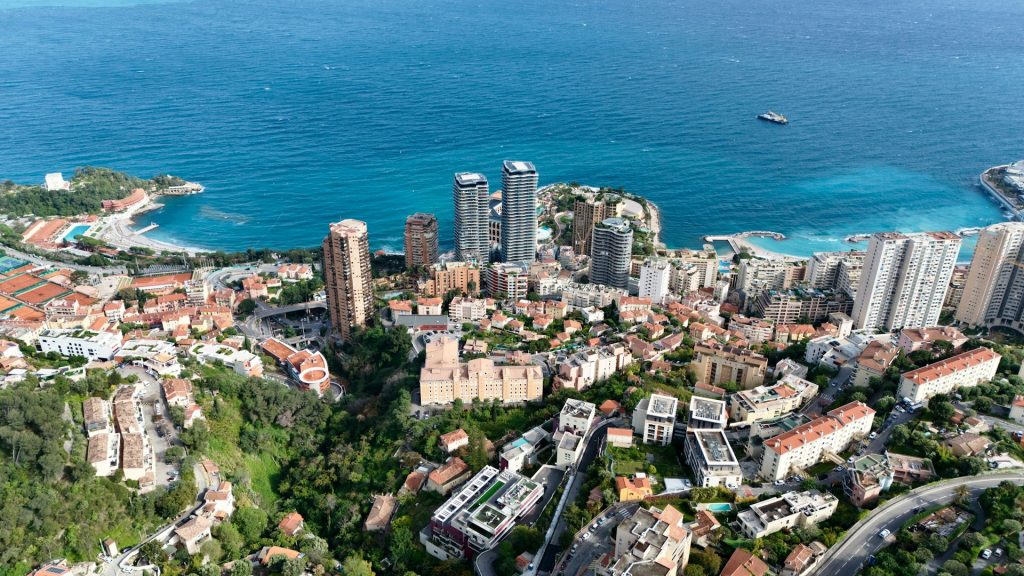
You cannot apply for residency without a physical address in the Principality. This is often the most expensive hurdle, as the property market is competitive and high-value.
To satisfy this condition, you must prove you have a place to live that is “appropriate” for the size of your household. The authorities are strict on overcrowding; a family of four cannot claim residency in a studio apartment.
You have three ways to prove this:
1. Buying a Property
You can purchase an apartment in your name. You must provide the notarized deed of ownership (acte de propriété).
- Read more: Buying Property in Monaco: A Guide for Chinese Investors (includes general buying process).
2. Renting a Property
You can sign a lease for a minimum of one year. The lease must be registered with the Tax Department.
- Note: Real estate agents will typically require 3 months of rent + 3 months of deposit upfront.
- Read more: Cost of Living in Fontvieille: 2025 Guide (for rental price examples).
3. Being Hosted (Hébergement)
You can live with a close relative (spouse or partner) who already resides in Monaco. They must sign a “Certificate of Free Accommodation” (Certificat d’Hébergement) and prove they own or rent the property.
Condition 2: Financial Self-Sufficiency
Monaco requires proof that you can support yourself without working in the Principality (unless you have already secured a local job contract). The government wants to ensure you will not become a burden on the state.
The “Magic Number”: €500,000
While there is no “official” law stating a fixed minimum, the standard practice for all Monaco banks in 2025 is to require a minimum deposit of €500,000 to open a residency relationship.
The Process:
- Open an account with a local Monegasque bank (e.g., CMB, Barclays, CFM Indosuez).
- Deposit the funds.
- The bank issues a formal “Bank Attestation” (Attestation Bancaire) addressed to the Immigration Section of the Sûreté Publique.
Alternative: If you are employed by a Monaco company, you can submit your employment contract and salary slips instead of the bank deposit.
Condition 3: Good Character (Criminal Record)
Monaco places a premium on safety and security. As such, they conduct thorough background checks on every applicant.
You must supply a valid criminal record check (Casier Judiciaire) from the last two countries where you have resided in the past five years.
- Validity: The document must be less than 3 months old at the time of application.
- Format: If the document is not in French, English, or Italian, it must be translated by a sworn translator.
The Application Process: EU vs. Non-EU Nationals
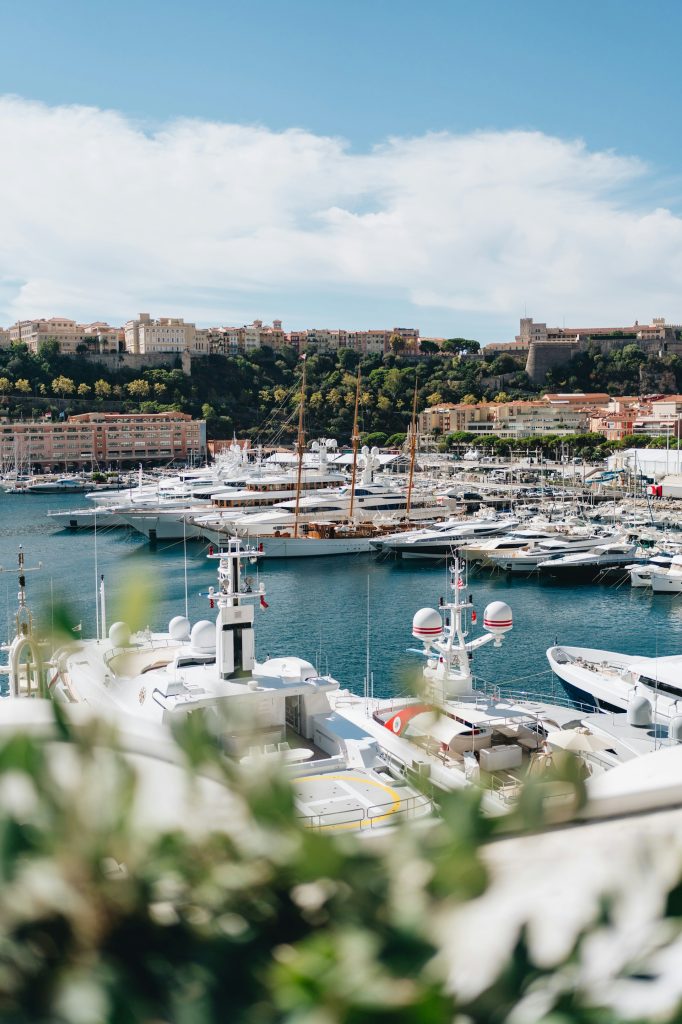
Once you have your documents (Accommodation + Bank Letter + Criminal Record), the procedure splits depending on your passport.
For EU / EEA Nationals
The process is streamlined. You do not need a visa.
- Gather Documents: Collect your lease, bank letter, and background check.
- Interview: Apply directly to the Residency Section in Monaco to schedule your interview.
- Processing: Receive your card within approx. 6-8 weeks.
For Non-EU Nationals (UK, USA, China, etc.)
You must complete a “pre-step” with the French authorities.
- Long-Stay Visa: Apply for a Type D Visa for Monaco (visa de long séjour) at the French Consulate in your current country of residence.
- Wait: Once the visa is approved and stamped in your passport, you can travel to Monaco.
- Monaco Application: Once in Monaco, you apply for the residency card just like an EU national.
Crucial: You cannot enter on a tourist visa and try to “swap” to residency. You must have the Type D visa first.
The Residency Interview
Every applicant (including children over 16) must attend an in-person interview at the Police Station.
- The Vibe: It is formal but polite.
- The Questions: They will ask about your family, your profession, your reasons for moving to Monaco, and your “centre of life.”
- Language: Interviews are often conducted in French, English, or Italian.
The Renewal Ladder: From Temporary to Permanent
Residency in Monaco is earned in stages.
- Carte Temporaire (Temporary Card): Valid for 1 year. You will be on this card for your first 3 years. You must renew it annually.
- Carte Ordinaire (Ordinary Card): Valid for 3 years. Issued after you have lived in Monaco for 3 years.
- Carte Privilège (Privilege Card): Valid for 10 years. Issued after 10 years of residency.
Summary Checklist
Before you book your flight, ensure you have these four items ready:
- [ ] Lease or Deed: A registered property contract in Monaco.
- [ ] Bank Letter: Proof of a relationship with a Monaco bank (typically €500k+).
- [ ] Clean Record: Police clearance from your current home.
- [ ] Visa (if applicable): Type D visa for non-EU citizens.
Considering the financial implications of your move? Read our detailed breakdown of the Tax Benefits of Owning Property in Monaco.